
Manufacturing

Every Kaytech product passes through a controlled process of manufacturing, inspection, and testing before it reaches site. See what goes into the quality you rely on.

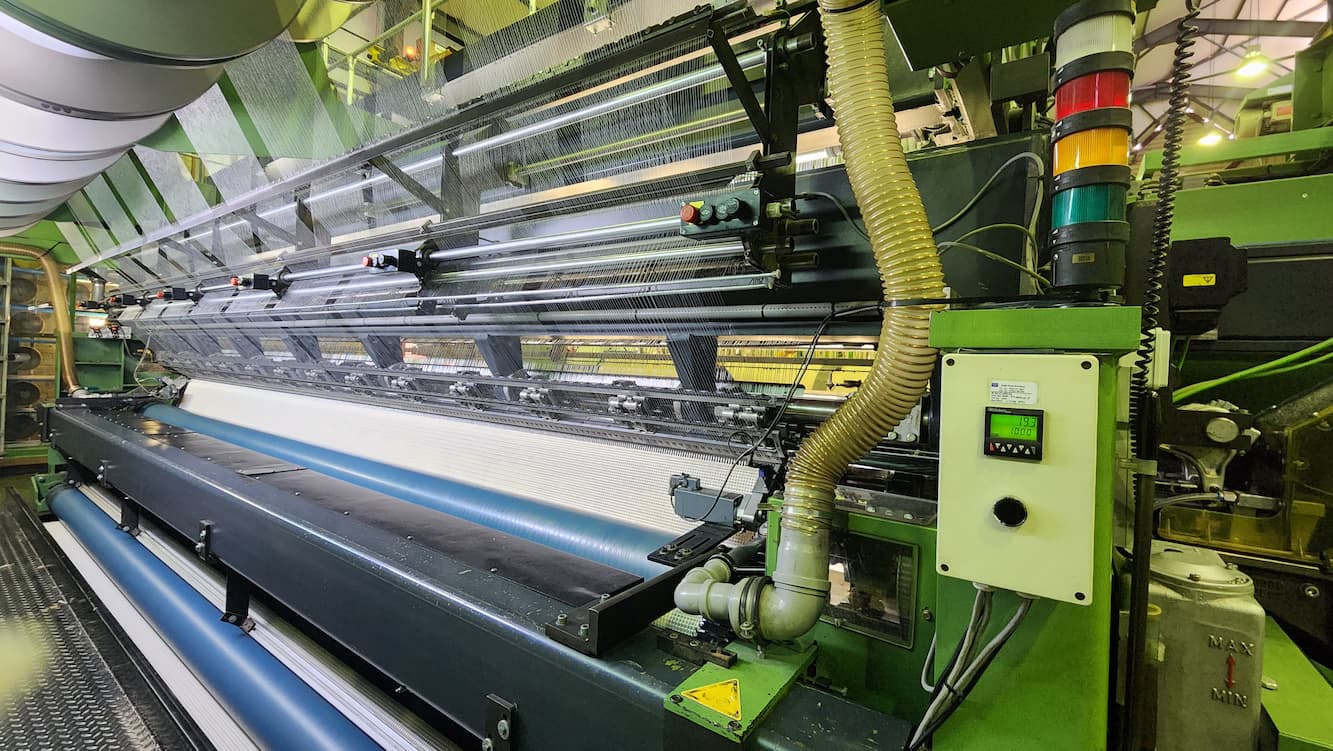
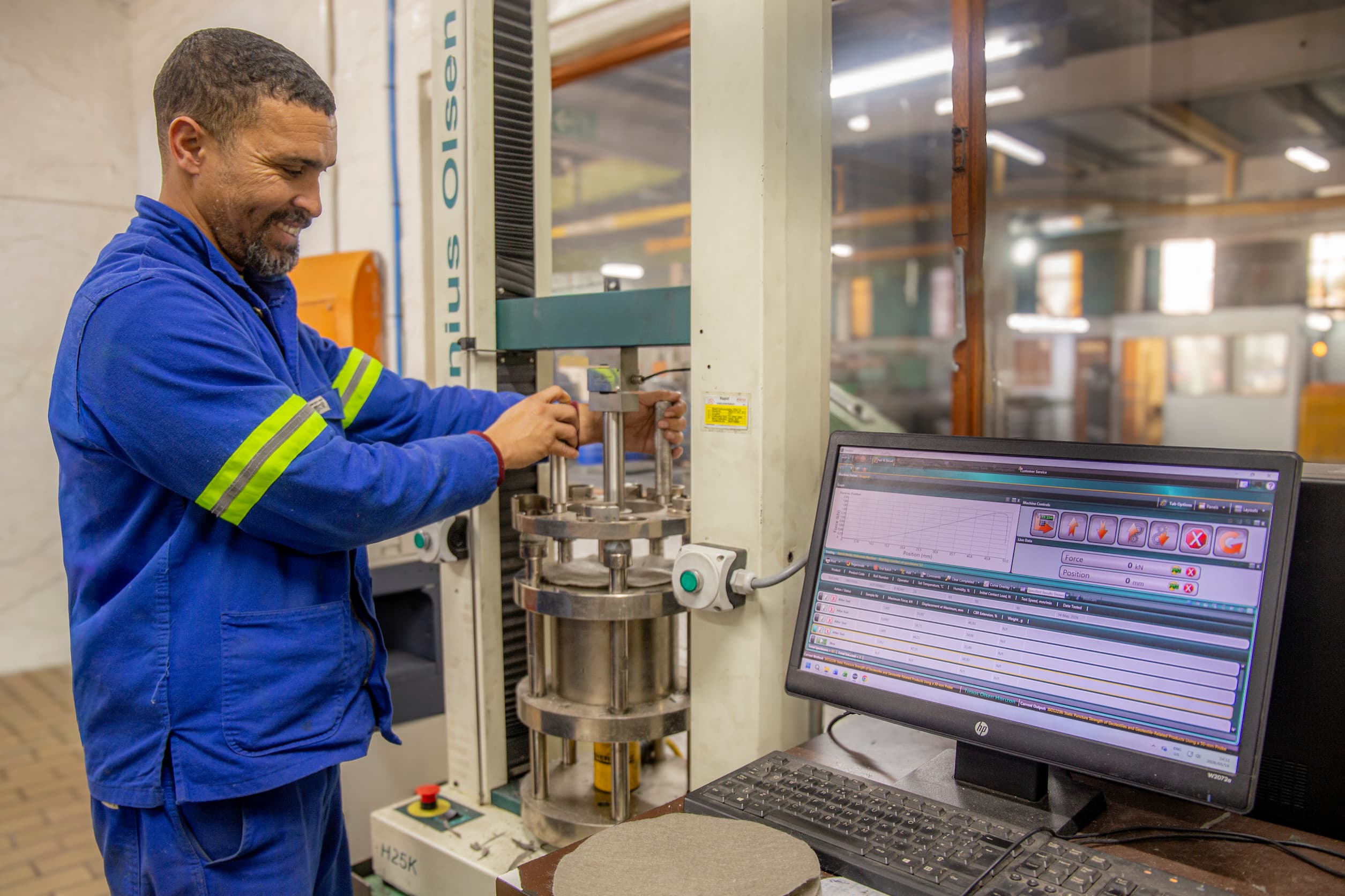
Our manufacturing runs 24 hours a day, and so does our quality oversight. In-process inspections are conducted at critical production intervals, with batch tracking maintained across all four locally manufactured products; bidim®, RockGrid® PC, EnviroRock® and EnviroFix®.

Production data logs allow reliable and accurate traceability and independent testing by accredited geosynthetics laboratories provide an additional, objective layer of verification, confirming that our products consistently meet or exceed published specification values, including Minimum Average Roll Values (MARVs).

Quality highlights

ISO 9001 Certified

Our Atlantis facility holds ISO 9001 certification (Reg. No. LS 1176), covering all manufacturing operations.

Production tracking

Every production run is assigned traceable references, enabling full traceability.

MARV reporting

Product data sheets report MARV or minimum values where required, while selected index and hydraulic properties are stated as typical values from accredited laboratory testing.

Independent testing

Products are tested by GAI-LAP accredited laboratories, providing objective, third-party verification of product performance.

In-process inspection

Quality checks are performed at defined intervals throughout each production run, not only at end-of-line, providing a high level of confidence in product quality. Quarterly internal auditing ensures our processes remain up to date and effective, with independent surveillance audits conducted annually.

Trained staff

Production staff are trained to documented procedures aligned with our quality management system and international standards.

Our recognised standards & certifications

Our manufacturing processes and products are independently assessed against recognised international and South African standards. These certifications are not administrative formalities. They are the assurance that customers, engineers and specifiers rely on when selecting geosynthetics for critical infrastructure.

ISO 9001 Quality Management

Our Atlantis production facility is ISO 9001 certified (Registration No. LS 1176). This internationally recognised standard confirms that our manufacturing processes are governed by a documented quality management system, subject to regular third-party audit. For customers, it means consistent product quality, traceable production records and a supplier committed to continuous improvement.

CE Certification

The CE mark confirms that our products meet the regulatory, safety and performance requirements for the European market. For customers and specifiers, it provides independent assurance that products have been assessed against recognised European standards, confirming suitability for demanding infrastructure applications where compliance and traceability are non-negotiable.

Independent Accredited Testing

Product testing is conducted by independent GAI-LAP accredited laboratories, ensuring that results are internationally credible and produced under independently audited conditions. This provides objective third-party verification of product performance, consistency and specification compliance, giving customers and specifiers the confidence that every product meets the standards required for critical infrastructure applications.

Performance you can verify

Every geosynthetic product we manufacture is subject to defined quality control and index testing to verify consistency with published product requirements. These values are supported by independent accredited laboratory testing against recognised EN, ISO and ASTM standards, and form the basis of our product data sheets and engineering specifications.

Below are five key index and quality control tests that provide practical insight into the real-world performance, consistency, and reliability of our locally manufactured products.

01

Tensile Strength & Elongation

ISO 10319 / ASTM D4595 - Wide Width Strip

What it proves: The maximum load a geotextile can carry before failure, and the amount it stretches under load. Results are reported as either MARV or minimum (product dependant).

Why it matters: In reinforcement and separation applications, such as road embankments, steep fills and basal reinforcement over weak ground, the geosynthetic must carry significant structural load without excessive deformation. This test confirms the product will perform under real construction stress.

Relevant to: bidim®, RockGrid® PC, EnviroRock®, EnviroFix®

02

Hydraulic Conductivity / Permittivity

EN ISO 11058 / ASTM D4491

What it proves: The rate at which water passes through the geotextile perpendicular to its plane (permittivity) and the volume of water it can transmit (hydraulic conductivity).

Why it matters: In drainage and filtration applications, a geotextile must allow the correct volume of water to pass through, neither too little (causing hydrostatic pressure build-up) nor in a way that allows fine particles to migrate. This test is fundamental for subsoil drainage design and dam liner protection specifications.

Relevant to: bidim®, RockGrid® PC, EnviroFix® (barrier performance), EnviroRock®

03

Puncture Resistance

EN ISO 12236 / ASTM D6241 - CBR

What it proves: The force required to push a standard plunger through the geotextile under controlled laboratory conditions.

Why it matters: Geosynthetics are subjected to installation stresses; stones, angular aggregate and heavy compaction equipment. Puncture resistance confirms the product can withstand these real-world installation conditions without damage that would compromise long-term performance.

Relevant to: bidim®, RockGrid® PC, EnviroRock®, EnviroFix®

04

Peel & Shear Strength for GCLs

EN ISO 13426 / ASTM D6496 / ASTM D6243

What it proves: For EnviroFix® GCL specifically: the internal bond strength between the bentonite core and the geotextile carrier layers (peel), and the shear resistance of the composite under load (shear).

Why it matters: A Geosynthetic Clay Liner is only as good as the integrity of its composite structure. If the bentonite separates from the carrier layers under installation loads or hydrostatic pressure, the hydraulic barrier fails. These tests confirm the composite is internally bonded sufficiently to maintain its sealing function throughout its service life.

Relevant to: EnviroFix® GCL

05

Mass per Unit Area

EN ISO 9864 / ASTM D5261

What it proves: The mass of the geotextile per square metre, the most fundamental product identification test.

Why it matters: Mass per unit area is the primary quality control indicator across all geotextile products. It confirms that every roll produced matches the specified grade, giving customers assurance that what is ordered is what is installed. MARV values are published for all bidim® grades.

Relevant to: bidim®, RockGrid® PC, EnviroRock®, EnviroFix®

Testing - Performance you can verify

Every geosynthetic product we manufacture is subject to defined quality control and index testing to verify consistency with published product requirements. These values are supported by independent accredited laboratory testing against recognised EN, ISO and ASTM standards, and form the basis of our product data sheets and engineering specifications.

Below are five key index and quality control tests that provide practical insight into the real-world performance, consistency, and reliability of our locally manufactured products.

01

Tensile Strength & Elongation

ISO 10319 / ASTM D4595 - Wide Width Strip

What it proves: The maximum load a geotextile can carry before failure, and the amount it stretches under load. Results are reported as either MARV or minimum (product dependant).

Why it matters: In reinforcement and separation applications, such as road embankments, steep fills and basal reinforcement over weak ground, the geosynthetic must carry significant structural load without excessive deformation. This test confirms the product will perform under real construction stress.

Relevant to: bidim®, RockGrid® PC, EnviroRock®, EnviroFix®

02

Hydraulic Conductivity / Permittivity

EN ISO 11058 / ASTM D4491

What it proves: The rate at which water passes through the geotextile perpendicular to its plane (permittivity) and the volume of water it can transmit (hydraulic conductivity).

Why it matters: In drainage and filtration applications, a geotextile must allow the correct volume of water to pass through, neither too little (causing hydrostatic pressure build-up) nor in a way that allows fine particles to migrate. This test is fundamental for subsoil drainage design and dam liner protection specifications.

Relevant to: bidim®, RockGrid® PC, EnviroFix® (barrier performance), EnviroRock®

03

Puncture Resistance

EN ISO 12236 / ASTM D6241 - CBR

What it proves: The force required to push a standard plunger through the geotextile under controlled laboratory conditions.

Why it matters: Geosynthetics are subjected to installation stresses; stones, angular aggregate and heavy compaction equipment. Puncture resistance confirms the product can withstand these real-world installation conditions without damage that would compromise long-term performance.

Relevant to: bidim®, RockGrid® PC, EnviroRock®, EnviroFix®

04

Peel & Shear Strength for GCLs

EN ISO 13426 / ASTM D6496 / ASTM D6243

What it proves: For EnviroFix® GCL specifically: the internal bond strength between the bentonite core and the geotextile carrier layers (peel), and the shear resistance of the composite under load (shear).

Why it matters: A Geosynthetic Clay Liner is only as good as the integrity of its composite structure. If the bentonite separates from the carrier layers under installation loads or hydrostatic pressure, the hydraulic barrier fails. These tests confirm the composite is internally bonded sufficiently to maintain its sealing function throughout its service life.

Relevant to: EnviroFix® GCL

05

Mass per Unit Area

EN ISO 9864 / ASTM D5261

What it proves: The mass of the geotextile per square metre, the most fundamental product identification test.

Why it matters: Mass per unit area is the primary quality control indicator across all geotextile products. It confirms that every roll produced matches the specified grade, giving customers assurance that what is ordered is what is installed. MARV values are published for all bidim® grades.

Relevant to: bidim®, RockGrid® PC, EnviroRock®, EnviroFix®

Supply capability & reliability

Kaytech’s manufacturing infrastructure has been built over more than five decades to support the sustained, reliable supply that civil engineering projects demand. Procurement teams and project engineers can specify Kaytech-manufactured geosynthetics with confidence, knowing the supply chain behind the product is as robust as the product itself.

Local manufacturing

All four locally manufactured products; bidim®, RockGrid® PC, EnviroRock® and EnviroFix®, are produced at our dedicated facility in Atlantis, Western Cape.

Continuous production

Our bidim® production operates 24/7/365, ensuring constant availability to meet peak project demand while simultaneously supporting branch stock levels.

Distribution

Five branches operating nationally; Pinetown, Johannesburg, Cape Town, East London and Gqeberha, with a dedicated export division servicing the rest of Africa.

Quality-assured stock

All stock is produced under our ISO 9001 quality management system, meaning that stock availability and product quality are managed together, not in isolation.

Over 50 years of supply reliability

Since 1971, Kaytech has maintained an excellent supply record to the Southern African engineering market through multiple economic cycles.

What sets our manufacturing apart

  • 01

    Over 50 Years of Continuous Geotextile Manufacturing in South Africa

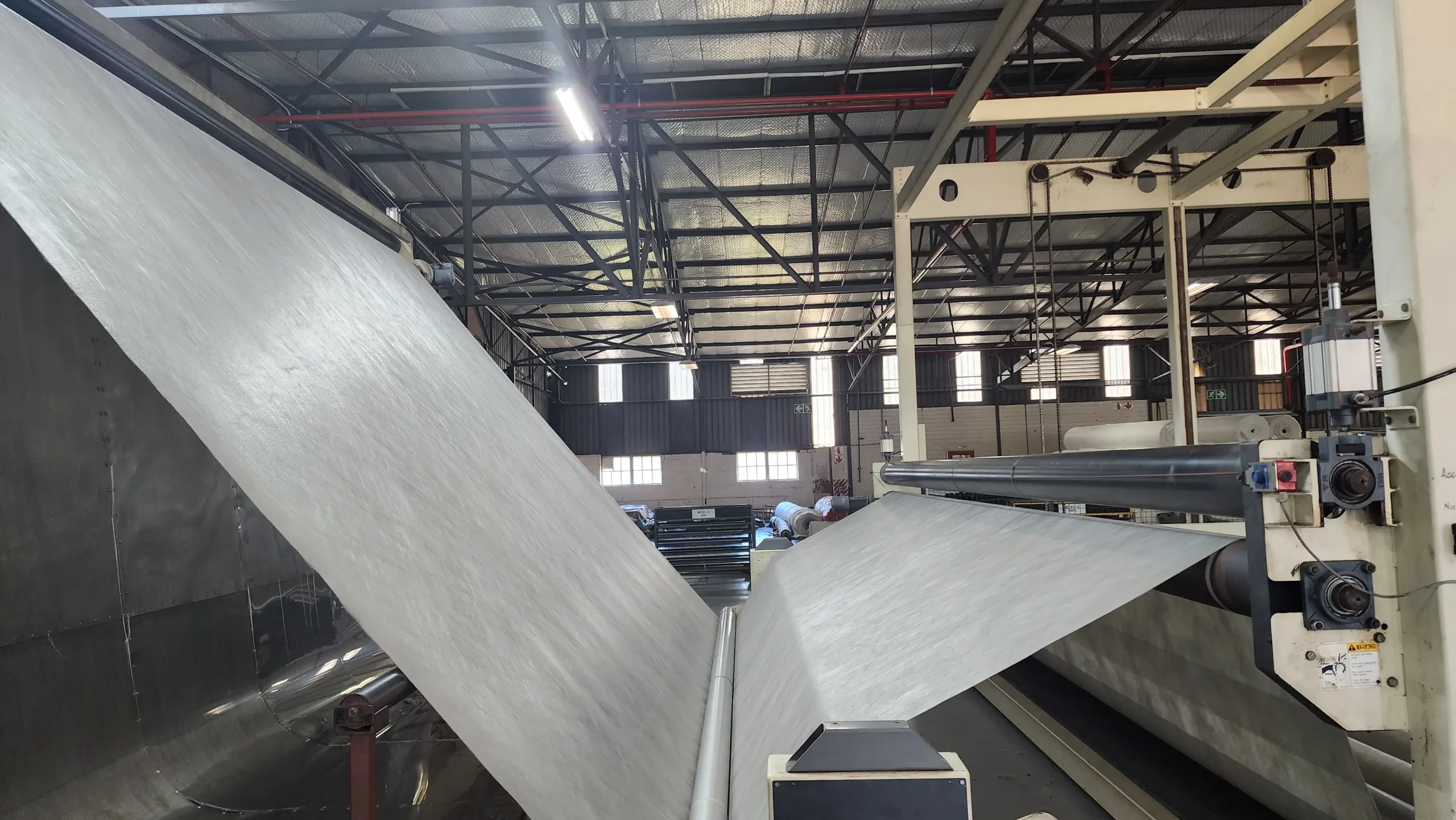
    Kaytech has been manufacturing geotextiles in South Africa since 1971, longer than any other local producer. That depth of manufacturing experience, institutional knowledge and sustained performance record is not something that can be replicated quickly.
  • 02

    First Composite Reinforcing Geotextile Manufactured in South Africa

    RockGrid® PC was the first composite reinforcing geotextile to be designed and manufactured locally in South Africa. Combining the reinforcement performance of a geogrid with the hydraulic and installation-damage-resistance properties of a nonwoven geotextile, it was an African first and remains the benchmark for locally produced composite reinforcement products.

  • 03

    Local Manufacturing, Locally Accountable

    Our Geotextiles are produced at our facility in Atlantis, Western Cape. Products can be dispatched to a national or international site directly or as stock from one of our five sales branches nationwide. Local production means shorter supply chains, faster response times and direct accountability to our customers. When you specify a Kaytech-manufactured product, you are dealing with the manufacturer directly, at every stage.

Interested in seeing how Kaytech products are manufactured?

Visit our manufacturing facility and see how Kaytech geosynthetic solutions are made. From raw materials through to finished products, you’ll gain a better understanding of the processes, quality controls, and expertise behind the solutions we supply.

Already scheduled your visit?

Please watch our Visitor Safety Video before arriving on site. It covers essential safety information to help ensure a seamless and secure visit.