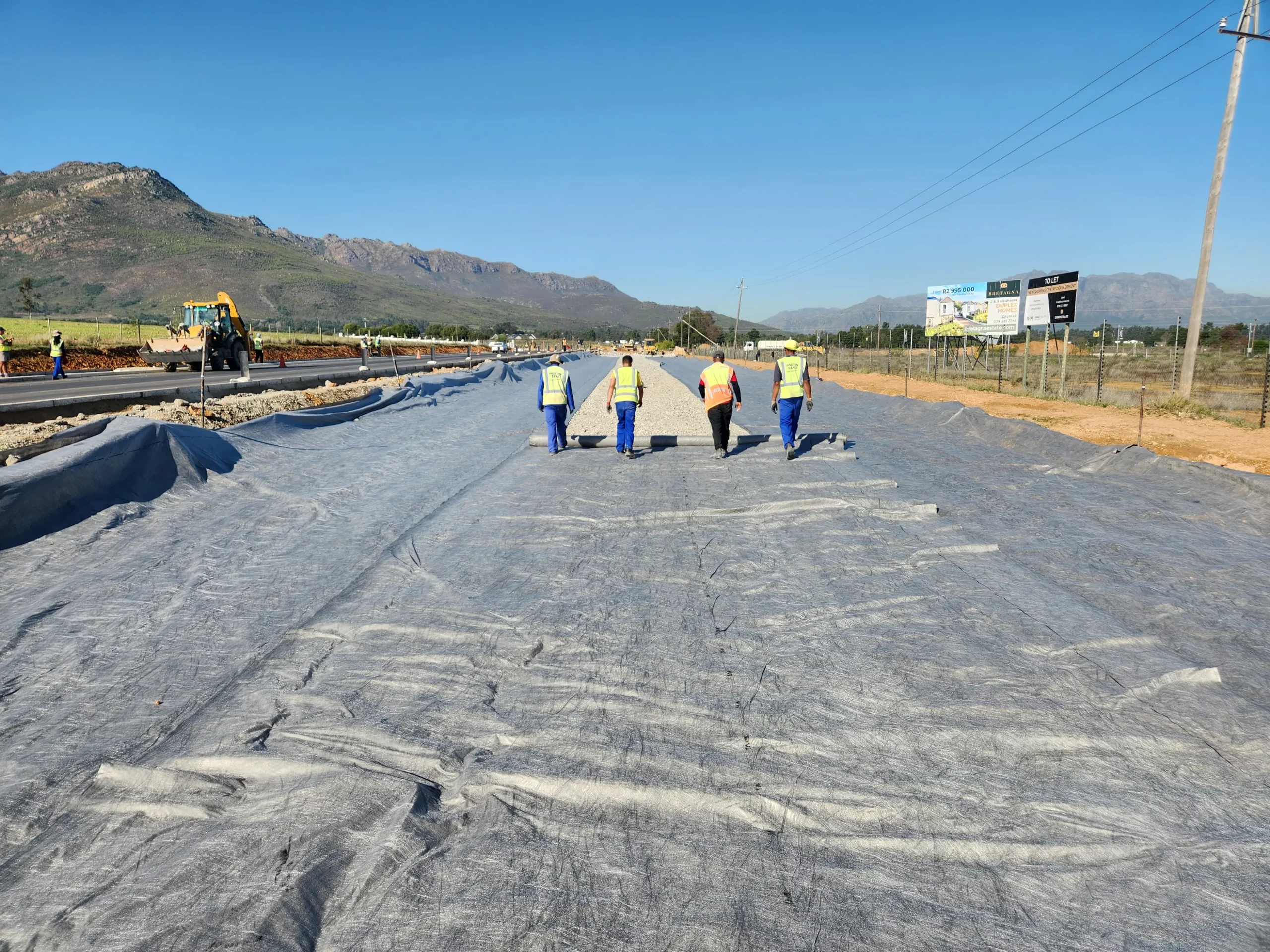
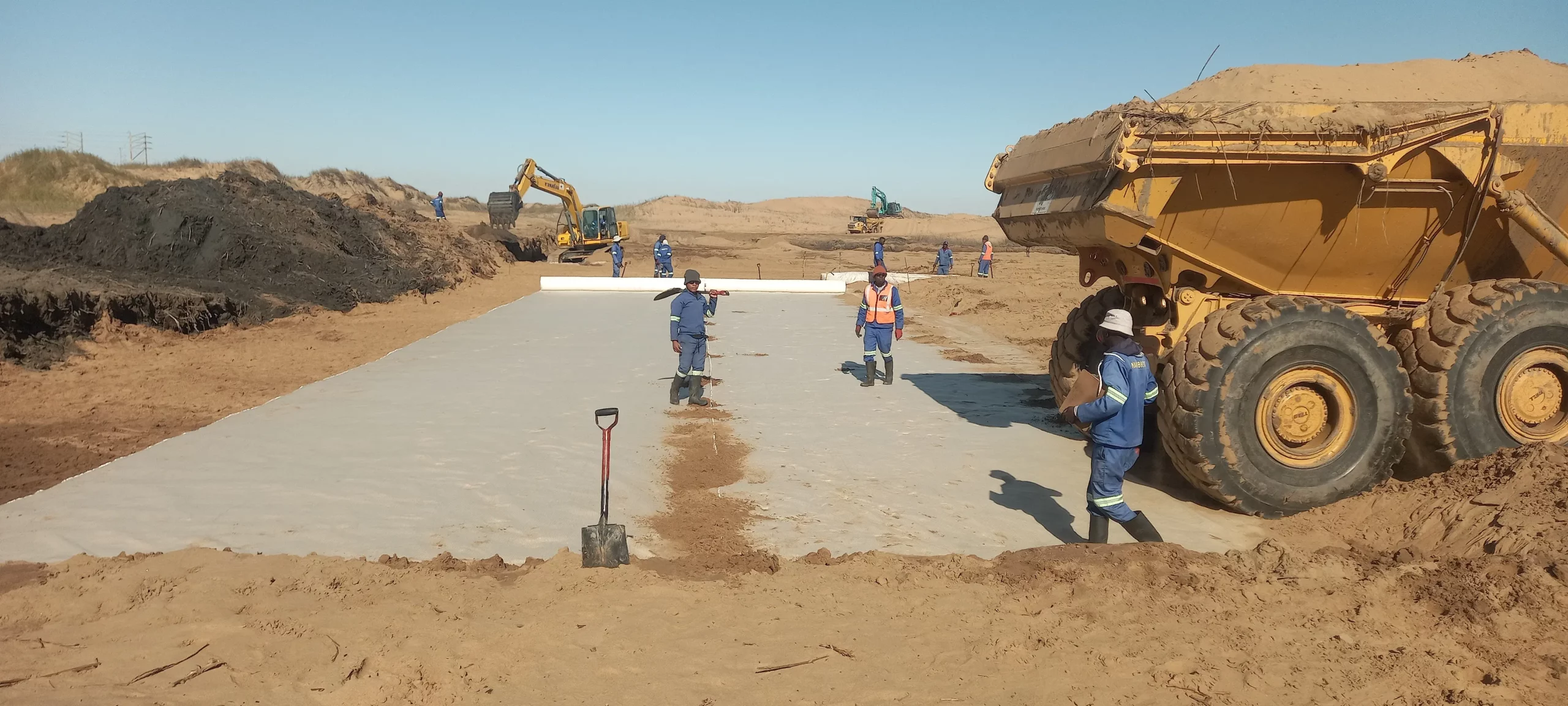
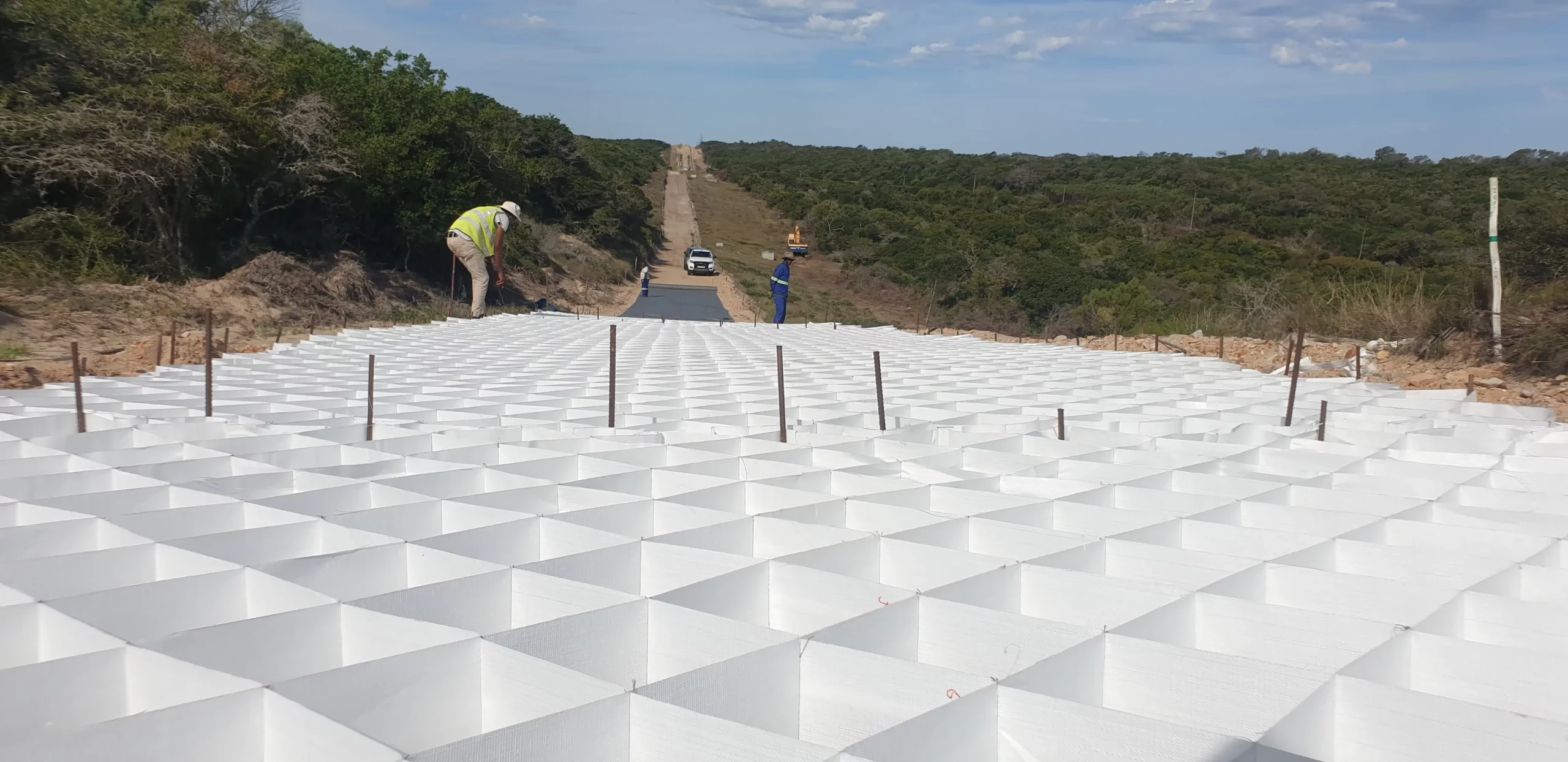
Ground stabilisation and reinforcement are essential where weak or variable ground conditions threaten the performance of civil infrastructure. In applications such as roads, platforms, and embankments, geosynthetics are used to improve load distribution, increase soil strength, and limit long-term deformation.
By reinforcing the interaction between soil and structure, geosynthetic solutions support safer construction and more reliable performance across a wide range of ground engineering conditions.
Improves weak or variable subgrades by enhancing load distribution and reducing deformation in road and pavement structures using geosynthetics.
Provides ground reinforcement at the base of embankments or fills to improve stability and control settlement over soft soils.
Creates stable working platforms that support construction traffic while protecting underlying soils and improving ground performance.
Improves load support over soft ground by distributing applied loads and limiting excessive settlement through soil reinforcement.
Enhances embankment stability by reinforcing soil layers, improving load transfer, and reducing the risk of slope failure.
Uses reinforced soil systems to form stable retaining walls capable of supporting vertical or near-vertical earth structures.
Improves slope stabilisation by increasing soil strength and resistance to erosion and long-term deformation.
Improves foundation support by enhancing bearing capacity, reducing differential settlement, and stabilising underlying soils.
Accelerates soft soil treatment by improving drainage paths and reducing consolidation time in compressible soils.

Soft, saturated, or inconsistent soils often lead to unexpected settlement, pumping, or loss of bearing capacity, particularly once construction traffic is introduced.

Unstable ground can limit access for construction equipment, disrupt programmes, and force repeated reworking of platforms just to keep construction moving.

Without adequate ground reinforcement, ongoing deformation, differential settlement, and premature deterioration remain a risk, increasing maintenance demands and lifecycle costs.
Geosynthetics reinforce weak and variable soils, increasing bearing capacity and distributing loads more evenly to reduce settlement and deformation. This ensures roads, embankments, and platforms perform reliably under both construction and operational loads.
By stabilising the ground quickly and effectively, geosynthetics create safer, more accessible working platforms. Equipment can operate efficiently, construction schedules are maintained, and rework caused by unstable ground is minimised.
Reinforced soils maintain structural integrity over time, limiting differential settlement, cracking, and other long-term performance issues. This reduces maintenance requirements, extends the service life of civil infrastructure, and improves lifecycle value.